Friday, April 29, 2011

Enterprise Search - PLM Challenge


Aras and Enterprise Search
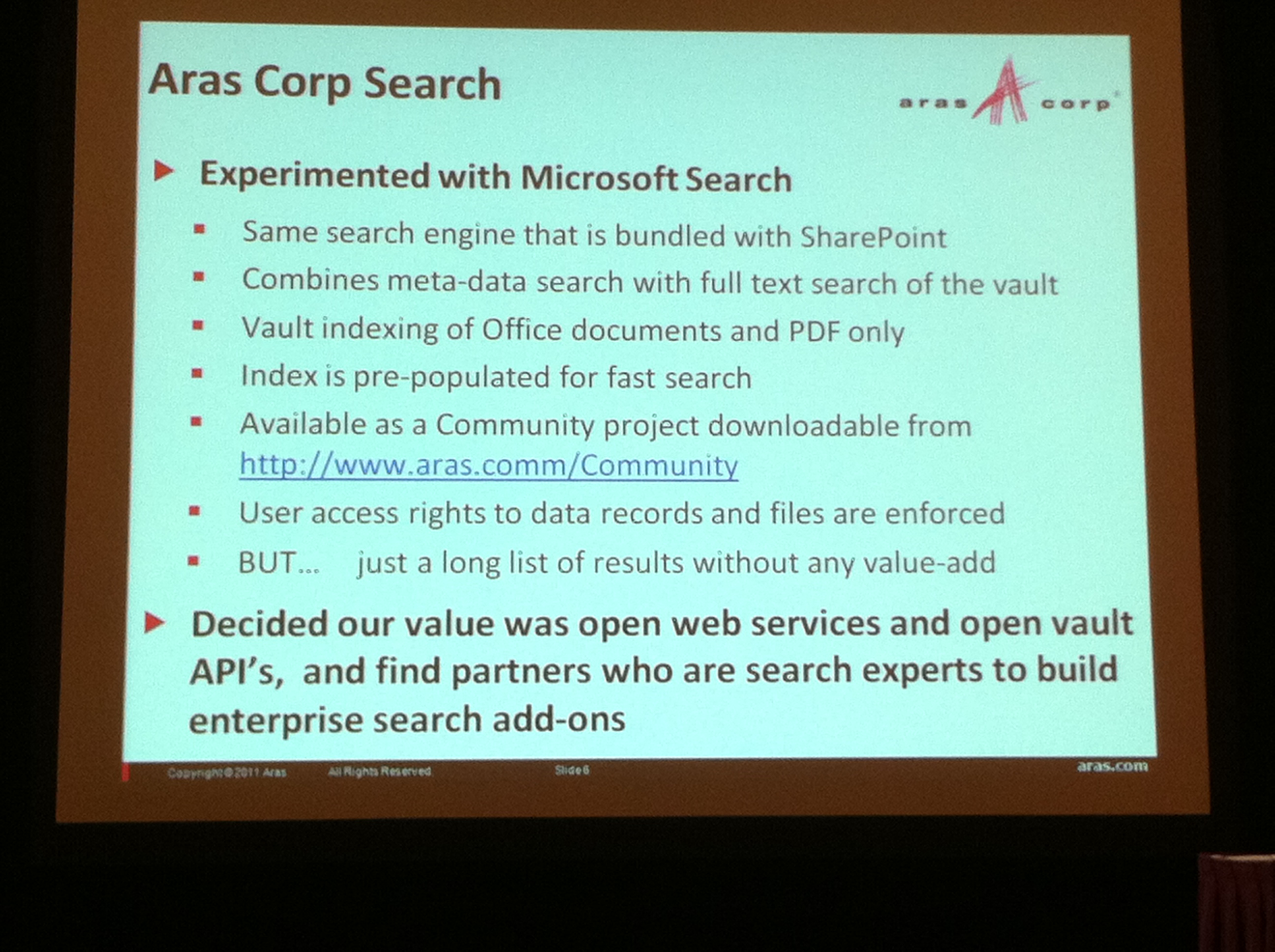
Aras is following OSS strategy to solve their momentarily interest in search. Built on top of Microsoft technological stack, Aras made an experiment with Microsoft based Search solutions. Most of them are coming today from SharePoint space.
I found the SharePoint search story a bit controversial. The actual cost of SharePoint solution can grow significantly depends on the size data storage and system configuration. Navigate your browser to the following interesting blog article to read more about The Real Cost SharePoint Search. You can also learn more about SharePoint search using ArnoldIT Overflight Search system. Navigate to the followinglink to browse through information about SharePoint search.
PLM, Enterprise Search and Open Source
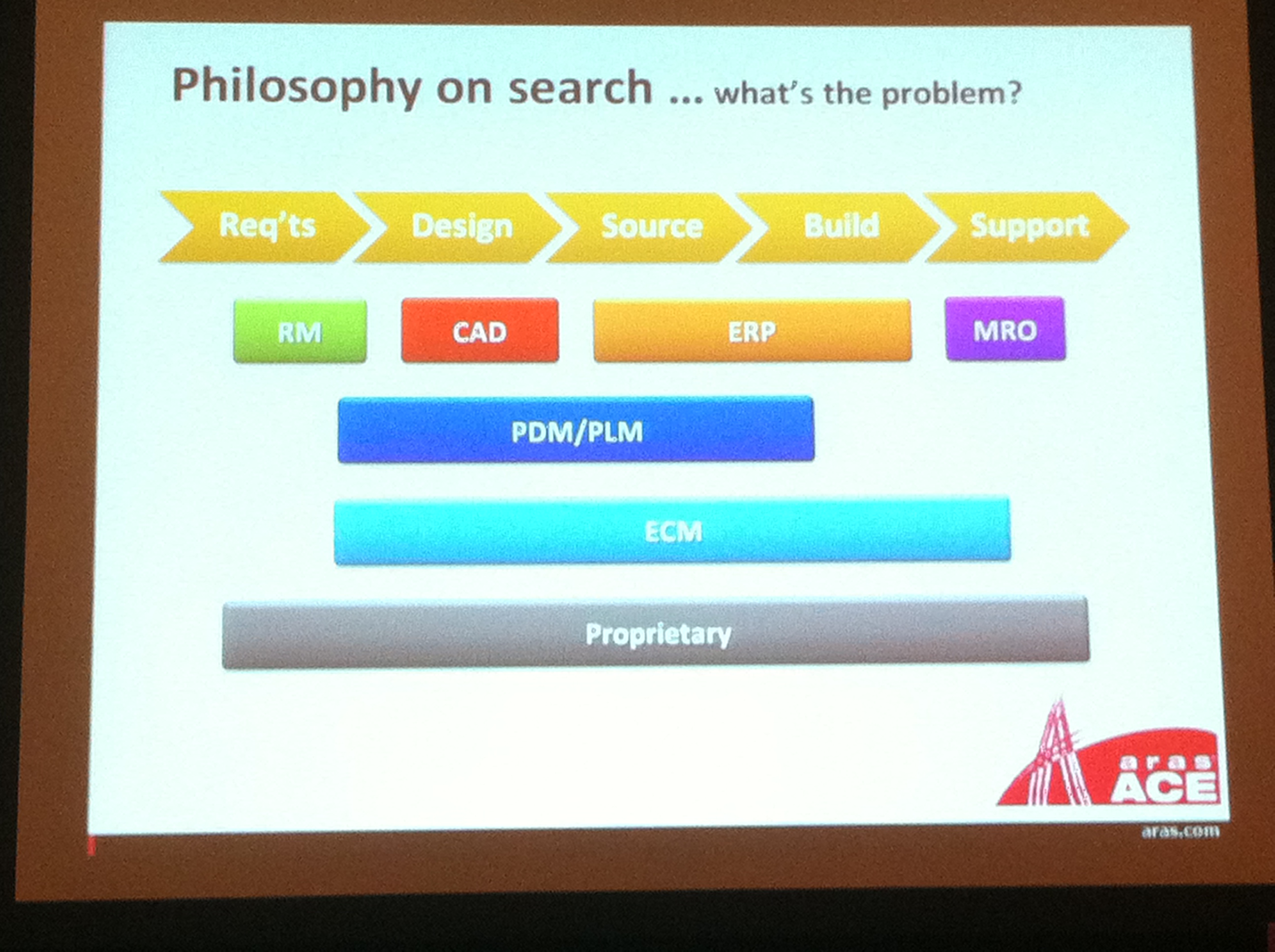
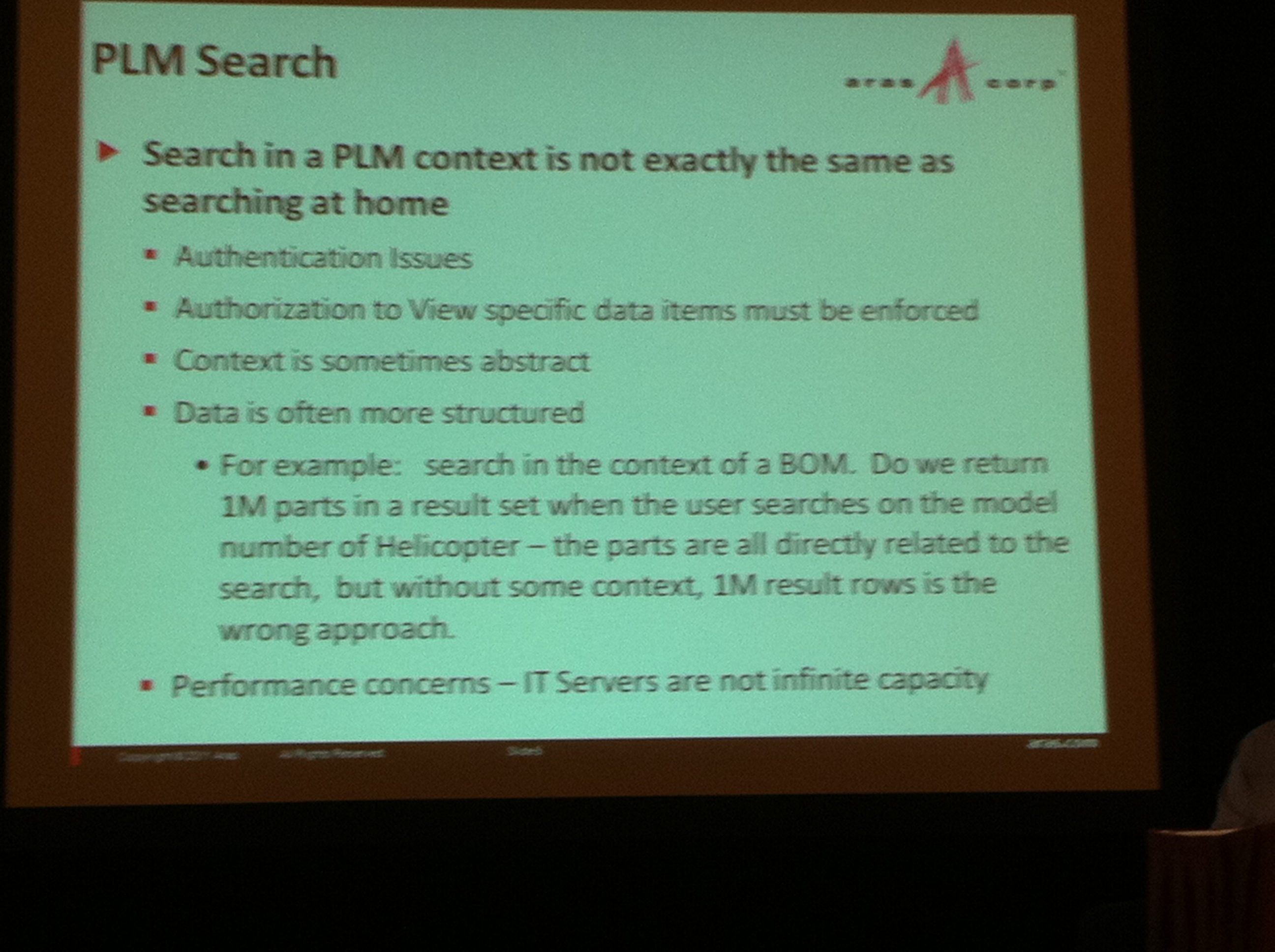
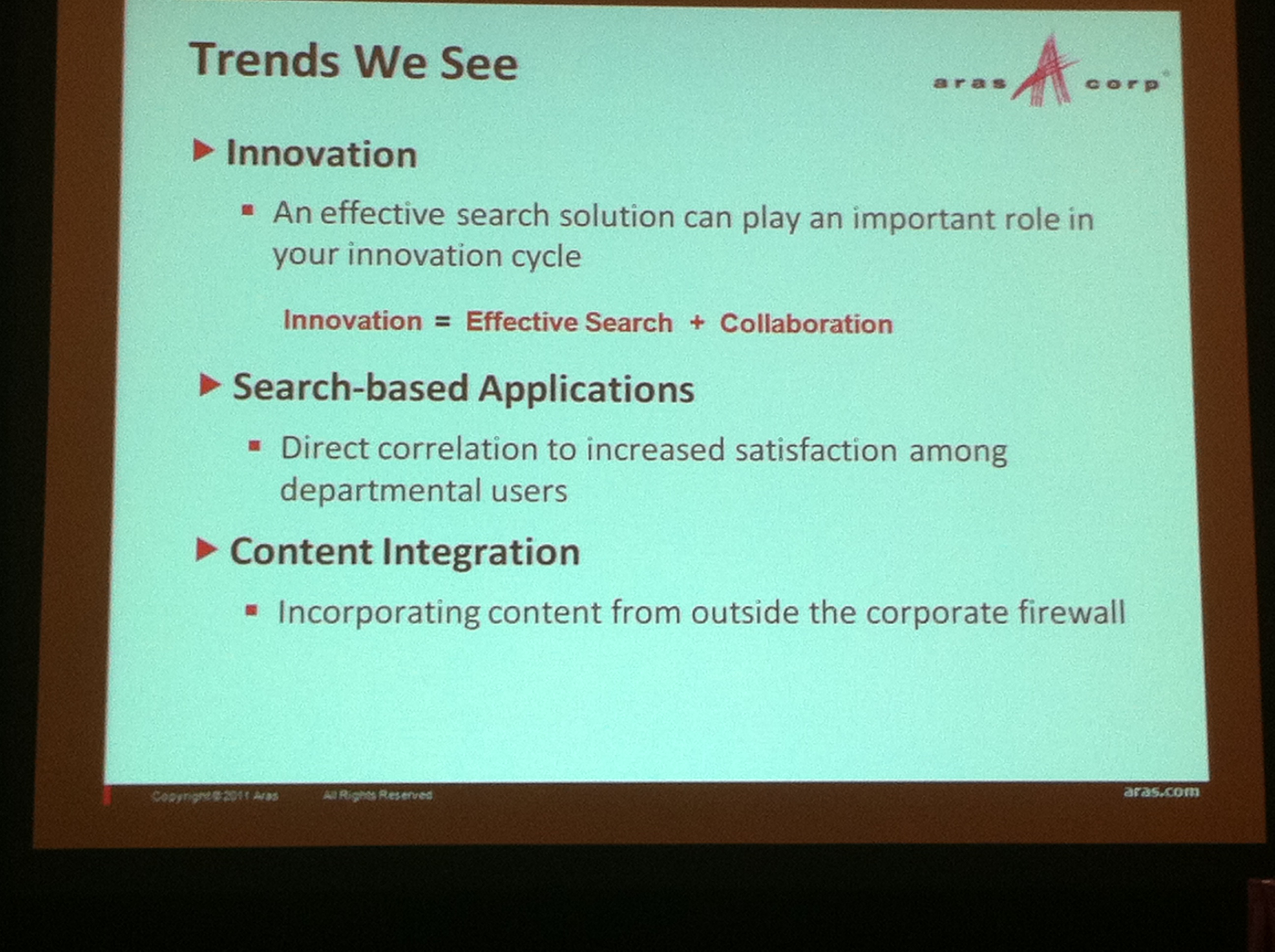
Alcove9 and NorthRidge presented their solutions and vision of enterprise search related to Aras and PLM. Take a look on the following slides and make your conclusion.
Aras Enterprise Search Strategy
I found Aras’ strategy in the space of search interesting. I can expect customers are interested in search these days. PLM vendors experience challenging position in this place. We have seen OEM agreements and acquisitions made by other PLM vendors. Aras is taking an alternative way and playing with Lucene/Solr enterprise search platform to bundle it with Aras using community partnerships. Here is what Peter Schroer said about Aras Search Strategy.
What is my conclusion? The amount of information in manufacturing companies is growing. PLM vendors clearly see the need to solve this problem. The solutions seem to be beyond the level of databases. The information is located in multiple applications, systems, files, databases. Search is one of the possible options to help people to solve the information problem. Aras’ choice to follow “open source” path is complementary to Aras’ vision of Enterprise Open Source. It seems to me a good balance to Dassault/Exaled and OEM agreements made by other PLM vendors. I expect this space to become more active in the future. Just my thoughts…
Courtesy - Oleg

Tuesday, April 26, 2011

PLM: Share Data or Die


I’m still digesting a huge amount of information I learned fromPLM Innovation Congress earlier this week in London. However, there is one trend that I can identify that struck me as a major one coming across all presentations and talks. I can call it “integrate and share” trend. The problem of integration and share of data is not new in manufacturing organization. The need for integration of various elements of data for product development, manufacturing and supply chain is clear. Software vendors and customers are working for on this for years. However, something new happens now that allow me to have a fresh look on this.
Integration Processes
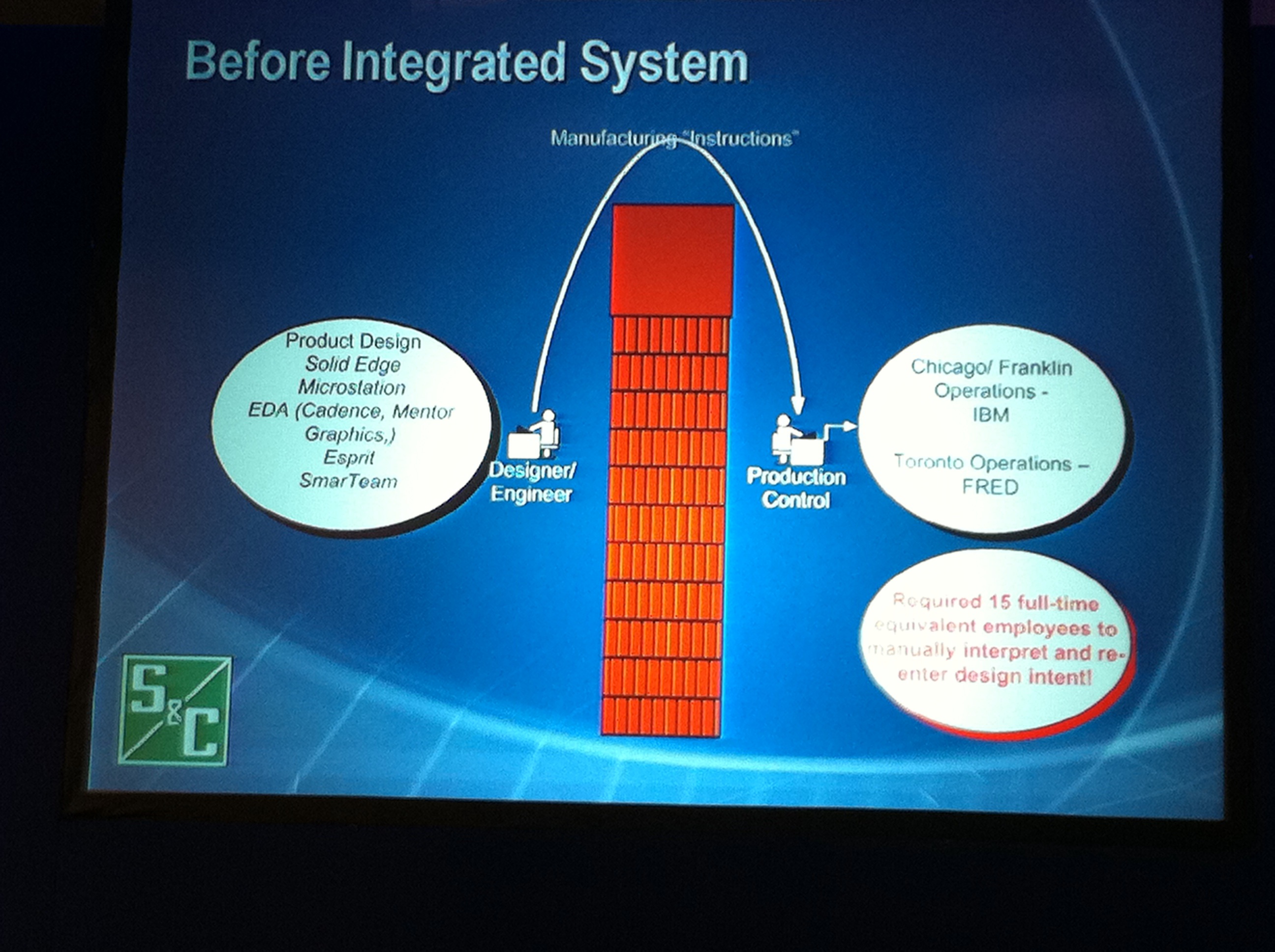
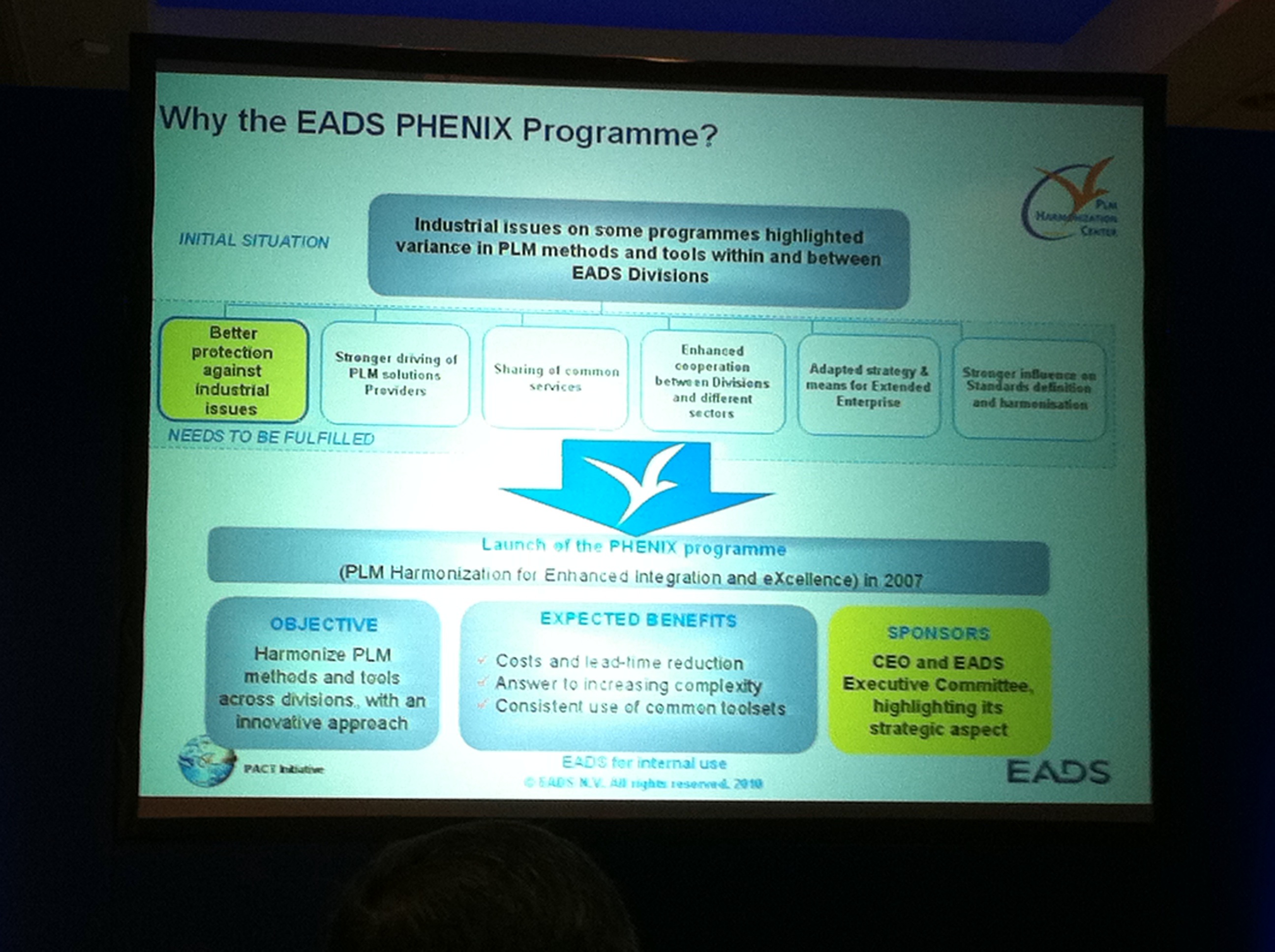
The sound of integration needs is very loud, and you are able to see it in presentations. I put few examples of pictures I made during the event to show how customers explain their critical business issues related to integration of data and processes in organizations. In a nutshell, inability to provide smooth integration prevents streamlining of organizational processes. It appears in communication between engineering and manufacturing, sales and production, support and sales.
Share Data
The need to share data is obvious. However, data sharing was never realized in an easy way. There are multiple reasons for that. Some of them are including the nature of people (keep my data close to me), company organization (departments, hierarchy, etc.) and competition between vendors (lock-in data inside of proprietary formats and data structures). At the same the value of data sharing is obvious. Organizations are losing money, projects are going out of schedules just because of that. PLM aimed to solve this problem during the past decade. I have to note a significant success in multiple implementations I had a chance to see. I personally participated in some of them. However, the ability to share data efficiently is still more science that ordinary process.
What is my conclusion? The need to integrate and share data is urgent. However, the way organizations are doing it, reminds me space shuttle programs. There is a need to downgrade and simplify these integration efforts to become more similar to transatlantic flights or even car trips. Just my thoughts…
Courtesy - Oleg
PLM: How to Fix Technologies and Stop Fixing People?


During the last week at COFES, I had a chance to listen toJohn Gage keynote – But Can It Slice a Pineapple? Gage talked about innovation, computers, changes, language and culture. One of his phrases resonated – “Technology is easy. People are hard“. It made me think about PLM concepts, technologies and implementations.
PLM and Product Development Process
In my view, product lifecycle management is about products development processes first. It originally started as PDM, it was very focused on data management. CAD models, Drawings, Revisions, Parts, Bill of Materials. It took almost 15 years to produce a reliable data management system that can handle all these things. However, the problem happened in between. Organizations became very complex. Many additional systems grew up to solve other business and development problems. Significant presence of ECAD and later software development introduce a new set of problems. So, product development process becomes more and more complicated. PLM companies eventually reflected the complexity in the taxonomies of their data and processes.
PLM Methodology
The question people often ask me – “what is the right PLM methodology?” It isn’t a new one. Since the complexity introduced in product developmnet continues to grow, PDM and PLM companies are trying to solve it by using various methods. One of them is to come with a clear methodology of work and system implementations. It started as “best practices” and then moved to the different colors and flavors of “how to” be related to PLM implementations. The biggest problem I have with this approach is that it actually requires a significant non-software influence in an organization. Which goes back to “people”.
PLM Technology
I think the question what is PLM technology is actually very confusing one. Nevertheless, I clarify it as a technology to manage data, processes and collaborate in a scope of product data development. So, what happens on this side? I don’t see any revolutionary changes since early 2000s. The massive amount acquisitions put vendors on a pathway of integrating acquisitions and converging technologies. The latest spark of PDM/PLM technologies happened in the last 1990s and early 2000s. Back that time, the concept of a flexible data model was invented. Finally, companies could create configurable applications. However, the outcome was an increased amount of service implementations and lots of methodology developments.
What is my conclusion? People are hard. I agree completely. To change them is near to impossible. By creating products that dependent on change of how people work, we are exposed to very long adoption cycle, expensive marketing and complicated implementations. Is it PLM fault? Yes, partially. People were exposed to a complicated stuff. However, fixing some technological issues can be a good idea to make products more friendly to people. I see a problem when PLM implementations are focused on how to change people’s work habits. The challenge is how to bring intelligent products that can handle the change for people. Just my thoughts…

PLM, Supply Chain and Cloud Adoption


Cloud is one of the most discussable topics in the industry. In the consumer web, cloud seems to be a proven option. I think, people are feeling very comfortable in the cloud these days. Days when people afraid to put their credit cards on the website for e-commerce gone forever. Earlier with Google and lately with Facebook, cloud becomes an obvious thing. However, when people talk about cloud adoption in the enterprise and manufacturing industry, things are not always as simple as Facebook climb towards 700 million users. I read Driving Automotive Industry to the cloud article by Ronald Teijken of IBM/Sterling Commerce. Ronald is speaking about the cloud opportunity in the Automotive supply chains. Here is my favorite passage:
Many manufacturers are wary of moving particular processes to the cloud, due to questions around trust and visibility. However, as manufacturers increasingly rely on IT to ensure the smooth running of their supply chains, the question of whether or not to move to the cloud is unavoidable. It provides some much needed elasticity both in terms of cost and more importantly the agility needed in the supply chain to support future growth.
This article made me think about some aspects of cloud implementation that can make the supply chain a low hanging fruit for cloud adoption.
Collaboration Space
When it comes to the communication between suppliers, the ultimate need is to have a space where both sides can collaborate easily and exchange information. In most of the industries (automotive is not exclusion), companies are not allowing a complete transparency between their internal data spaces. Therefore, to have a separate cloud-based environment can be a solution to improve communication between OEM and various suppliers.
Security
This is another big question on the “cloud roadmap”. It is always presented as a case why manufacturing companies won’t be interested to go alongside with the cloud. Put aside companies internal stories. To communicate with suppliers, data needs to go out anyway. This is a chance to public or near-private cloud to show up and establish a trustful position. Cost, reliability and availability can be factors to lead manufacturing to adopt it.
What is my conclusion?
Cloud is an interesting space these days. Leverage huge consumer market adoption, it will inspire people in the enterprise to adopt some of the best cloud examples. Will automotive manufacturing supply change be a “low hanging fruit”? I can see it possible… Just my thoughts, of course.

Courtesy - Oleg

PLM and Microblogging


PLM and Microblogging
The term “collaboration” is one of probably most confusing. PDM and PLM vendors presented multiple concepts and products that supposed to help people to collaborate. None of them was able to shift the way people communicate and email was king of the road all the time. Microblogging tools may create a new way to communicate also inside organizations. Is it possible to use the same tools like Yammer to communicate between people in product development organization? I think positive about that option. One of the key elements to succeed in this transformation is to connect information to this communication. This is a tricky part of this transformation game.
conclusion? The internet and mobile tools created new ways to communicate. Tools like Yammer and Sociacast can transform communication paradigms. Manufacturing organizations and product development can use these tools to make communication easier. PLM tools will integrate towards mainstream communication platforms to leverage the power of microblogging and social networking.

PLM Definitions- Multiple Dimensions


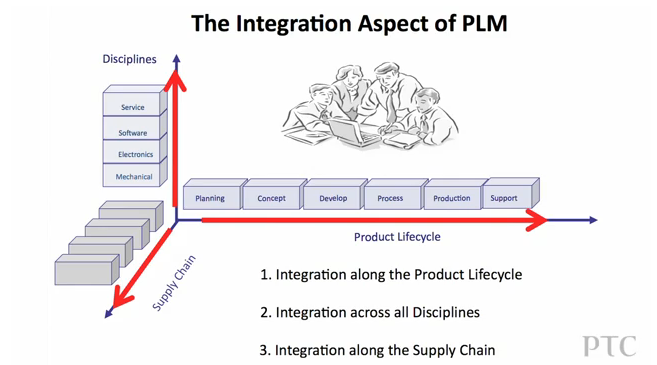
 Martin Eigner of the University of Kaiserslautern. Prof. Eigner also known as a founder of Eigner PLM system. Take a look on the following video and make your opinion (video is courtesy of PTC).
Prof. Eigner is talking about three dimensions of PLM integration: Lifecycle, Discipline and Supply Chain.
What is my take? PLM is very often using the context of “integration” when defines what is PLM about. These are very relevant aspects. For me, another, very important aspect of integration is openness. In my view, this is a missing link in many PLM implementations. Later this week I’m going to attend Aras Community Event (ACE 2011) in Detroit. You can follow my twitter and #ArasACE hash tag for more information.

Courtesy - Oleg

Thursday, April 21, 2011

Alcatel-Lucent Ups Competitive Edge with Agile PLM


Brad Magnani of Alcatel-Lucent Enterprise describes how the Oracle Agile PLM and Oracle EBS solutions help speed time to market, eliminate wasted cash, secure data, and ensure product quality, enabling innovation and success.